March delivered growth, and many took it as a positive signal. But a closer look shows that the picture is more complex — and more interesting. We have not returned to the old “normal”; we have entered a new reality. And the most important shift did not happen in the vehicle fleet — it happened in the buyer’s mind.
Why has the used-car segment suddenly become the market’s main pillar? Why are used Chinese cars growing faster than any other category? And how has the customer changed? Let’s break it down step by step.
Two markets, two trajectories
The biggest mistake today is to talk about the market as a whole. New cars and used cars are following very different paths. In the new-car segment, March did bring a boost, but a sustainable recovery is still not in place. The passenger car category is supporting the market, while commercial vehicles — except for buses — have yet to fully recover. The year started on a difficult note, and one strong month does not make a trend.
The used-car market tells a very different story: total title transfers rose by 5%. Passenger cars remain the clear leader, but other segments are also catching up. Used cars have become the main support for demand thanks to their lower entry point. When new cars become more expensive and lending conditions tighten, buyers move to the used-car market — and they do so deliberately.
Chinese brands are no longer exotic
Chinese cars are now part of the new market reality. Trust in Chinese brands is growing, as is their share of the market. Here too, there are two separate stories. In the new-car market, LADA still holds the lead, but its share is declining noticeably, while Haval, Chery, Geely, and Tenet posted strong gains. The used Chinese car segment is growing even more strongly and faster than the market overall. This is not a short-term spike from month to month — it is a long-term trend. At the same time, it is important to look beyond national averages: regional markets differ in meaningful ways.
The car is no longer about a dream
The consumer who bought out of fear of shortages in 2022 is gone. The buyer who was worried about endless price growth in 2023–2024 has also adapted. Emotion-driven purchases are over. Today’s customer is a calculator-driven decision-maker. They compare options, read reviews, leave, return, and take longer to make a decision than before.
Marketing and the new funnel
The customer journey used to be simple — five steps from advertising to deal. Today it involves many more touchpoints: they see an ad, dismiss it, compare, read reviews, ask for advice, watch videos, and only then visit the showroom — already with a preferred option in mind. That means dealers no longer need to “sell” in the traditional sense. They need to confirm that the customer has made the right choice. This requires a new marketing strategy: staying visible across all relevant platforms so the brand becomes the “right” option in the customer’s mind.
Marketing stories and AI
People remember stories, not facts. That was the key message from Aizhan Zakirova, Head of Development and Training at Aster Auto Financial Service (Kazakhstan), who shared her media promotion experience and unconventional tactics. Among the examples she mentioned were night sales on Telegram, 1+1 promotions, and ascending and descending auctions. Not every tool can be applied to the Russian market, but the broader point is clear: the market is demanding more original solutions for marketing and sales.
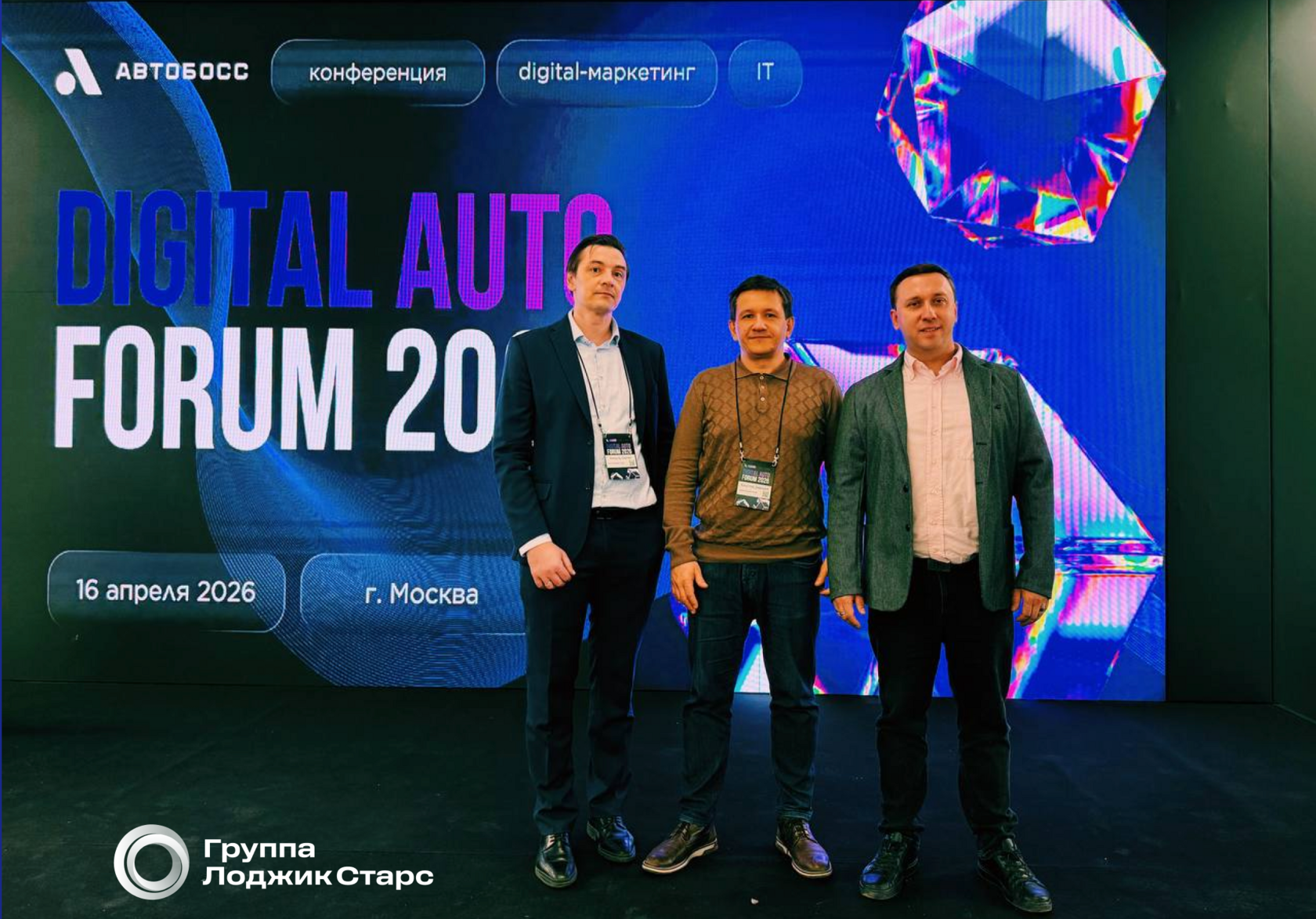
The forum also discussed marketing tools in detail, including the practical use of AI. Dealers are already using artificial intelligence for call analytics, service booking, and customer database management. At the same time, human review remains essential: one incorrect AI-generated response can damage reputation, and not every process can be managed through a checklist alone.
Service as a revenue engine
While some players focus on attracting new customers, others are monetizing existing ones by developing service offerings. This is one area where AI can deliver especially strong value.
Under the working name “AutoPilot Bot,” Logic Stars Group presented a solution for finding the documentation needed in service operations. We identified at least eight information sources a technician may need when working on a vehicle, including service history, warranty requests, technical service bulletins, software updates, and more. Searching across such a large data set often consumes a significant amount of staff time.
We developed a tool that streamlines the search process and does more than simply return an answer: it provides source links and takes the user directly to the relevant page in the document. Fast, accurate, and verifiable.
The bot is already actively used in several dealerships and is receiving positive feedback. Saving a technician’s time translates directly into service revenue.
Closing thought
The market has shifted, and there is no going back. The customer has changed — they no longer buy a dream; they buy transportation and calculate the cost. AI is becoming a reliable operational assistant, taking over more and more routine tasks. Those who recognize this in time will capture demand. The rest will be left in the rearview mirror.
Why has the used-car segment suddenly become the market’s main pillar? Why are used Chinese cars growing faster than any other category? And how has the customer changed? Let’s break it down step by step.
Two markets, two trajectories
The biggest mistake today is to talk about the market as a whole. New cars and used cars are following very different paths. In the new-car segment, March did bring a boost, but a sustainable recovery is still not in place. The passenger car category is supporting the market, while commercial vehicles — except for buses — have yet to fully recover. The year started on a difficult note, and one strong month does not make a trend.
The used-car market tells a very different story: total title transfers rose by 5%. Passenger cars remain the clear leader, but other segments are also catching up. Used cars have become the main support for demand thanks to their lower entry point. When new cars become more expensive and lending conditions tighten, buyers move to the used-car market — and they do so deliberately.
Chinese brands are no longer exotic
Chinese cars are now part of the new market reality. Trust in Chinese brands is growing, as is their share of the market. Here too, there are two separate stories. In the new-car market, LADA still holds the lead, but its share is declining noticeably, while Haval, Chery, Geely, and Tenet posted strong gains. The used Chinese car segment is growing even more strongly and faster than the market overall. This is not a short-term spike from month to month — it is a long-term trend. At the same time, it is important to look beyond national averages: regional markets differ in meaningful ways.
The car is no longer about a dream
The consumer who bought out of fear of shortages in 2022 is gone. The buyer who was worried about endless price growth in 2023–2024 has also adapted. Emotion-driven purchases are over. Today’s customer is a calculator-driven decision-maker. They compare options, read reviews, leave, return, and take longer to make a decision than before.
Marketing and the new funnel
The customer journey used to be simple — five steps from advertising to deal. Today it involves many more touchpoints: they see an ad, dismiss it, compare, read reviews, ask for advice, watch videos, and only then visit the showroom — already with a preferred option in mind. That means dealers no longer need to “sell” in the traditional sense. They need to confirm that the customer has made the right choice. This requires a new marketing strategy: staying visible across all relevant platforms so the brand becomes the “right” option in the customer’s mind.
Marketing stories and AI
People remember stories, not facts. That was the key message from Aizhan Zakirova, Head of Development and Training at Aster Auto Financial Service (Kazakhstan), who shared her media promotion experience and unconventional tactics. Among the examples she mentioned were night sales on Telegram, 1+1 promotions, and ascending and descending auctions. Not every tool can be applied to the Russian market, but the broader point is clear: the market is demanding more original solutions for marketing and sales.
The forum also discussed marketing tools in detail, including the practical use of AI. Dealers are already using artificial intelligence for call analytics, service booking, and customer database management. At the same time, human review remains essential: one incorrect AI-generated response can damage reputation, and not every process can be managed through a checklist alone.
Service as a revenue engine
While some players focus on attracting new customers, others are monetizing existing ones by developing service offerings. This is one area where AI can deliver especially strong value.
Under the working name “AutoPilot Bot,” Logic Stars Group presented a solution for finding the documentation needed in service operations. We identified at least eight information sources a technician may need when working on a vehicle, including service history, warranty requests, technical service bulletins, software updates, and more. Searching across such a large data set often consumes a significant amount of staff time.
We developed a tool that streamlines the search process and does more than simply return an answer: it provides source links and takes the user directly to the relevant page in the document. Fast, accurate, and verifiable.
The bot is already actively used in several dealerships and is receiving positive feedback. Saving a technician’s time translates directly into service revenue.
Closing thought
The market has shifted, and there is no going back. The customer has changed — they no longer buy a dream; they buy transportation and calculate the cost. AI is becoming a reliable operational assistant, taking over more and more routine tasks. Those who recognize this in time will capture demand. The rest will be left in the rearview mirror.